
OTSecurity

Local Grocery Store Could Be a Target

Photo by Franki Chamaki on Unsplash

Your local supermarket is an OT environment.

And your food just got hacked.

Attackers forced food freezers into defrost mode.

At nearly 100 grocery stores at once.

-> Ruined food.
-> Heavy food losses.
-> Setting small fires.
-> Causing chaos and confusion.

Attacks against OT and ICS environments are increasing.

Not only in number, but in impact.

Before, a single store might have been hit.

Now it’s almost 100 at once.

Think of how this might impact other areas.

-> 100 power plants
-> 100 subway trains
-> 100 desalination plants
-> 100 electric substations
-> 100 manufacturing sites
-> 100 food processing plants
-> 100 water treatment facilities

This list can go on forever.

It impacts so much more.

Ultimately, it impacts our families, friends, and communities.

If you’re responsible for an environment like this, start here:

-> List out each controller you have and its firmware version
-> Determine if they can be reached from the Internet
-> Look to see if there are any known vulnerabilities on the controllers
-> Update the firmware as necessary
-> Change default credentials
-> Remember updates aren’t everything – keep access limited
-> Set up out-of-band alerting systems to tell you if your temperature is too high

Protecting OT from cyber attacks doesn’t have to be complicated.

But we still have to put in the work and close our security gaps.

Before the attackers find them.

And take advantage of them.

Even inside our grocery stores.
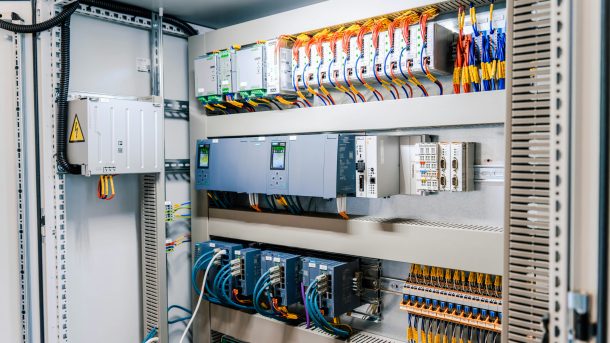
IT vs. OT Cybersecurity: What’s the Difference?

Photo by Raymond Sime on Unsplash

IT and OT cybersecurity are closely related, but they protect different environments and require different security approaches.

  1. IT Cybersecurity (Information Technology)

IT security protects data, applications, and business systems.

Examples:

  • Laptops, servers, and databases
  • Cloud platforms and business applications
  • Corporate networks and email systems
  • Identity and access management

Key priorities: Confidentiality, Integrity, and Availability (CIA).

Common threats include ransomware, phishing, data breaches, and credential theft.

  1. OT Cybersecurity (Operational Technology)

OT security protects systems that monitor and control physical processes in industrial environments.

Examples:

  • PLCs (Programmable Logic Controllers)
  • SCADA systems
  • DCS (Distributed Control Systems)
  • HMIs, sensors, and industrial controllers
  • Manufacturing and production equipment

Key priorities: Safety, Availability, Reliability, and Process Integrity.

Common threats include unauthorized changes to control logic, disruption of industrial processes, and compromise of remote access.

  1. Key Differences

IT incidents can cause data loss, financial damage, and business disruption.

OT incidents can also stop production, damage equipment, affect the environment, or create safety risks.

Carefully evaluate patching, rebooting, and active vulnerability scanning in OT environments because they can disrupt critical industrial processes.

  1. Why IT/OT Convergence Matters

As industrial environments become more connected, compromised IT systems can create pathways into OT networks.

Effective protection requires network segmentation, restricted remote access, continuous monitoring, secure configurations, and coordinated incident response.

Standards and guidance such as IEC 62443 and NIST SP 800-82 help organizations develop appropriate industrial cybersecurity practices.

The Bottom Line

IT protects digital business operations.

OT protects physical industrial operations.

Both are essential, and securing them requires collaboration between IT, cybersecurity, engineering, and operations teams.